If you asked for a quote to connect WhatsApp to your business, you were probably given a number that sounds reasonable. A price per user per month, maybe with a discount for paying for the full year. That number is almost never what you will pay.
Not because anyone is lying to you. It is that WhatsApp Business API has three different costs, charged by three different parties, and most quotes only mention one. This guide separates all three so you can build your own number instead of trusting someone else's.
Why the number you were quoted is incomplete
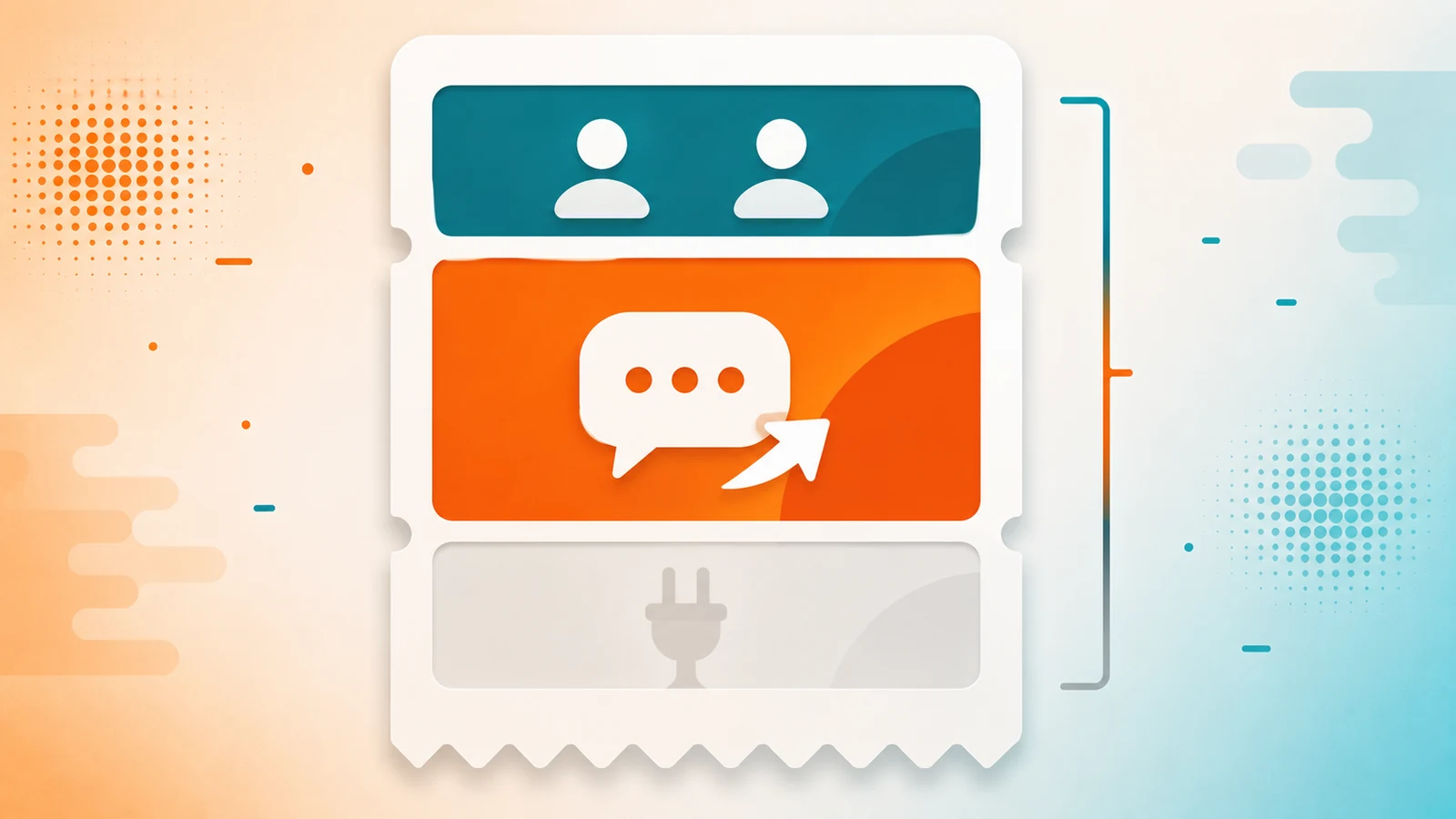
The three costs are:
- The CRM license. Per user, per month. It is the number you are almost always quoted, and the only one most people mention.
- What Meta charges for the messages you initiate. It is separate, Meta charges it directly, and it applies the same regardless of which CRM you choose.
- The connector or BSP, if you need one. Zero when the CRM already has WhatsApp built in. One more cost when you have to add an external app.
The typical mistake is treating the first as if it were the total. A business that budgets only the license and then starts sending WhatsApp campaigns gets a surprise in month two — and it is not the CRM's fault, it is that nobody explained there is a second meter running.
Cost 1: the CRM license
This is the easiest one to know because it is published. Taking the two CRMs we work with, list price per user per month in USD:
| Kommo | USD / user / month |
|---|---|
| Base | $15 |
| Advanced | $25 |
| Pro | $45 |
| Enterprise | On request |
With Kommo there is a detail that changes the budget and is worth knowing before you sign: it does not offer monthly billing. The minimum subscription is six months, with terms of 6, 9, 12 and 24 months. The discount by term is not published, so you have to ask. WhatsApp works from the Base plan; what scales by plan is automation — Salesbot and broadcasts start at Advanced.
| Pipedrive | Annual | Monthly |
|---|---|---|
| Lite | $14 | $19 |
| Growth | $24 | $34 |
| Premium | $59 | $64 |
| Ultimate | $69 | $89 |
Pipedrive does allow monthly payment, and the fair comparison against Kommo is against its annual column, since Kommo commits by the half-year anyway. One nuance that matters for this calculation: Pipedrive's native WhatsApp inbox is documented from the Growth plan and does not appear on its public pricing page. If you stay on Lite, cost 3 stops being zero.
License prices checked at each provider's official sources on July 26, 2026. They change: confirm them before you buy.
Cost 2: what Meta charges
Here is the part almost nobody explains to you, and it is what makes two businesses on the same CRM pay very different invoices.
It is also the part where you will find the most outdated content, because Meta changed the model on July 1, 2025. A good deal of what was published before that date — including guides still circulating — describes a system that no longer exists.
Today Meta charges per template message, not per conversation. What gets charged are the messages you initiate using an approved template. What you reply inside a conversation the customer opened is not charged.
The practical consequence is the one that matters: replying to a customer is free. When the customer writes to you first, a 24-hour window opens and inside that window you can reply freely, as many times as needed, at no cost. Serving people well does not cost you more.
The 24-hour window still exists, but it no longer defines what you pay — it defines what you do not pay.
Three template categories are charged, each with its own rate:
- Marketing — promotions, offers, cart recovery.
- Utility — order confirmations, appointment reminders, shipping notices.
- Authentication — verification and login codes.
With one nuance that saves you money today, and that almost nobody explains: a utility template sent inside the 24-hour window the customer opened is not charged. It is only charged when you send it outside that window. The nuance applies only to utility: marketing is always charged, and so is authentication.
Note the date: this benefit ends on October 1, 2026, the same day service messages start being charged. Meta's change that day has two parts, not one.
And these are not charged:
- Session messages — your replies inside the 24-hour window the customer opens. This covers all customer service.
- A 72-hour window for click-to-WhatsApp ads and for the call-to-action button on a Facebook page: messages that start there are free during that period.
There is no longer a monthly allowance of free conversations. That scheme belonged to the previous model; today what is free is the above, with no monthly cap.
The rate per message also depends on the country, and Mexico has its own.
These are the current rates for Mexico, per message:
| Category | USD per message | MXN per message |
|---|---|---|
| Marketing | $0.0305 | $0.5614 |
| Utility | $0.0085 | $0.1565 |
| Authentication | $0.0085 | $0.1565 |
| Service / session | Free today — see the note below | |
Official Meta rates effective July 1, 2026, verified on July 27, 2026. The exchange rate built into the rate card is around 18.4 MXN per USD.
There are volume discounts, but only on utility and authentication: at high monthly volumes the rate steps down to as much as 25% less (about $0.0064 USD per message). Marketing has no volume discount — message number ten costs the same as message number one hundred thousand. If your plan is to grow on campaigns, that detail matters more than any license difference between CRMs.
A date worth noting: service messages are free today, but Meta starts charging for them from October 1, 2026. If you are budgeting a year out, your customer service cost stops being zero in the last quarter. It is worth asking your provider how they will reflect it before it arrives.
Cost 3: the connector, and when it is zero
This cost exists or does not exist depending on how WhatsApp reaches your CRM.
It is zero when the CRM builds WhatsApp in directly. You buy nothing extra, you configure no bridge, and you have one provider and one invoice.
It is not zero when the CRM does not carry the channel on your plan and you have to install a messaging app from its marketplace. That app charges its own subscription, separate from the CRM license and separate from what Meta charges. It also adds its own initial setup and its own support when something fails — which is a real cost even though it appears on no invoice.
To size it up, the entry prices of three connectors used in Mexico (verified on July 27, 2026):
- Callbell — from €15 per user per month. Charged per agent, in euros, and WhatsApp credits are separate.
- Leadsales — from $97 USD a month. Careful with this one: the entry plan does not include WhatsApp Business API, only the WhatsApp app. For the API you have to move up to the $133 USD plan. It is a Mexican provider and its product is built in Spanish from the start.
- Wati — from about $20 USD a month with annual billing; paying month to month costs more.
These amounts sit on top of the CRM license and on top of what Meta charges. When you compare "CRM with WhatsApp built in" against "CRM plus connector," this sum is what you have to weigh — not just the difference between the two licenses.
Example: how to build your number
The formula is simple:
(license × users) + (template messages × their rate) + connector = your monthly cost
What is interesting appears when you run it for two different businesses. Both with three users, both on the same CRM. The only thing that changes is how they use WhatsApp.
Business A: serves, does not chase
A clinic. Patients write to book, the team replies. Per month: around 500 customer-initiated conversations, and about 120 appointment reminders that go out outside the 24-hour window. No campaigns.
- License: 3 users × $25 = $75 USD
- Incoming conversations and all replies: $0
- 120 utility templates × $0.0085 = $1.02 USD (about $19 MXN)
- Connector: $0
Total: around $76 USD a month. What Meta charges is 1% of the invoice. For this business, the fear of "what WhatsApp charges" was unfounded — its cost is the license, full stop.
Business B: goes out looking
A retailer sending promotions. Same three-person team, same CRM, but each month it fires around 15,000 marketing templates and 500 utility ones outside the window.
- License: 3 users × $25 = $75 USD
- 15,000 marketing templates × $0.0305 = $457.50 USD (about $8,400 MXN)
- 500 utility templates × $0.0085 = $4.25 USD
- Connector: $0
Total: around $537 USD a month, of which Meta takes 86%. Here the CRM license is the footnote and the messaging cost is the business.
That contrast is why nobody can tell you "it costs X" without first asking how you sell. Two businesses identical in software, with invoices that differ by seven times. And notice what did not change between them: the license price. Choosing a CRM over ten dollars of difference while you send fifteen thousand marketing messages is optimizing the wrong line.
What makes the invoice grow
Four things, in order of real impact:
- The volume of marketing templates. It is the most expensive category, the one you decide freely, and the only one without a volume discount: message one hundred thousand costs the same as the first. One bulk campaign can cost more in a day than the license does all month.
- How many templates go out outside the 24-hour window. This is the nuance that moves the most money and almost nobody explains: if the customer has already written to you and you are inside that window, your utility templates are not charged (marketing always is). The charge appears when you are the one opening cold contact, or when the template is marketing. This utility exemption ends on October 1, 2026 (the detail is in "Cost 2"). The same appointment reminder can cost zero or cost you, depending on whether it landed inside an open conversation or outside it.
- The number of CRM users. The license is per user. Four reps cost four times one.
- The plan the feature you need forces you onto. If you need automation or native WhatsApp, the plan that actually serves you may not be the entry one. Budgeting from the cheapest plan's price and then discovering it does not do what you needed is the most expensive mistake on this list.
How to verify the rates yourself
Meta's rates change, and any article that quotes them — including this one — ages. Before you run final numbers, check them at the source:
- The official WhatsApp Business platform pricing page, filtering by Mexico and by conversation category.
- The pricing page of the CRM you are evaluating, because plans get renamed — Pipedrive did it recently, and a good deal of the content circulating still quotes plan names that no longer exist.
If something you read elsewhere does not separate these three costs, treat it as an incomplete number.
Frequently asked questions
Does Meta charge per message or per conversation?
Per message, since July 1, 2025. Before that it charged per 24-hour conversation, which is why so much outdated content circulates. Today only the templates you initiate are charged: marketing, utility and authentication.
Does replying to a customer cost anything?
No. When the customer writes to you first a 24-hour window opens, and inside that window you can reply as many times as needed at no cost. Serving people well does not cost you more.
How much does a WhatsApp message cost in Mexico?
At rates current as of July 27, 2026: marketing $0.0305 USD (about $0.5614 MXN) per message; utility and authentication $0.0085 USD (about $0.1565 MXN). Service messages are free today. Utility and authentication have volume discounts; marketing does not.
Does the CRM price include what WhatsApp charges?
No. They are two separate costs charged by two different parties: the license is charged by the CRM and the messages by Meta. Neither of the two CRMs we use adds a margin to Meta's cost according to their documentation, so that part is identical whichever you choose.
When do service messages stop being free?
October 1, 2026. If you are budgeting twelve months out, your customer service cost stops being zero in the last quarter. It is worth asking your provider how they will reflect it before that date arrives.
Yocoya is a Kommo and Pipedrive partner. Meta's cost is identical with either one, so in this guide there is no winner that suits us: the one that suits you is the one that fits how you sell.